Sunday, February 15, 2026

Spellbooks as Encounters

 It is a commonly held belief that spells are demons, bound in leather & parchment. Wizardly grimoires then are highly valued because they are difficult to obtain & likely unique. (System dependent - scribing is a long held tradition amongst wizards. However, both Knave 2e & Cairn 2e, my OSR touchstones, are explicit that spells cannot be copied). 

Most magic advancement comes from stealing a spellbook from a deceased wizard, either long dead or recently murdered. But what if we cut out the middleman and went straight to the source? 

Demons as Spellbooks as Encounters

Wizards seeking unique spells must seek demons to either slay or barter with. A slain demon will transform into memetic information and fly into a binding vessel rather than let itself dissipate. Typical binding vessels are spellbooks, though crystal spheres, wands & staves can be fabricated for a similar function. Illiberal wizards might even use their flesh as a binding vessel to ensure no others can steal their arcane secrets. A slain demon without a vessel to inhabit will fly into a creature's mind, quickly driving them mad and transforming their host into the same demon. 
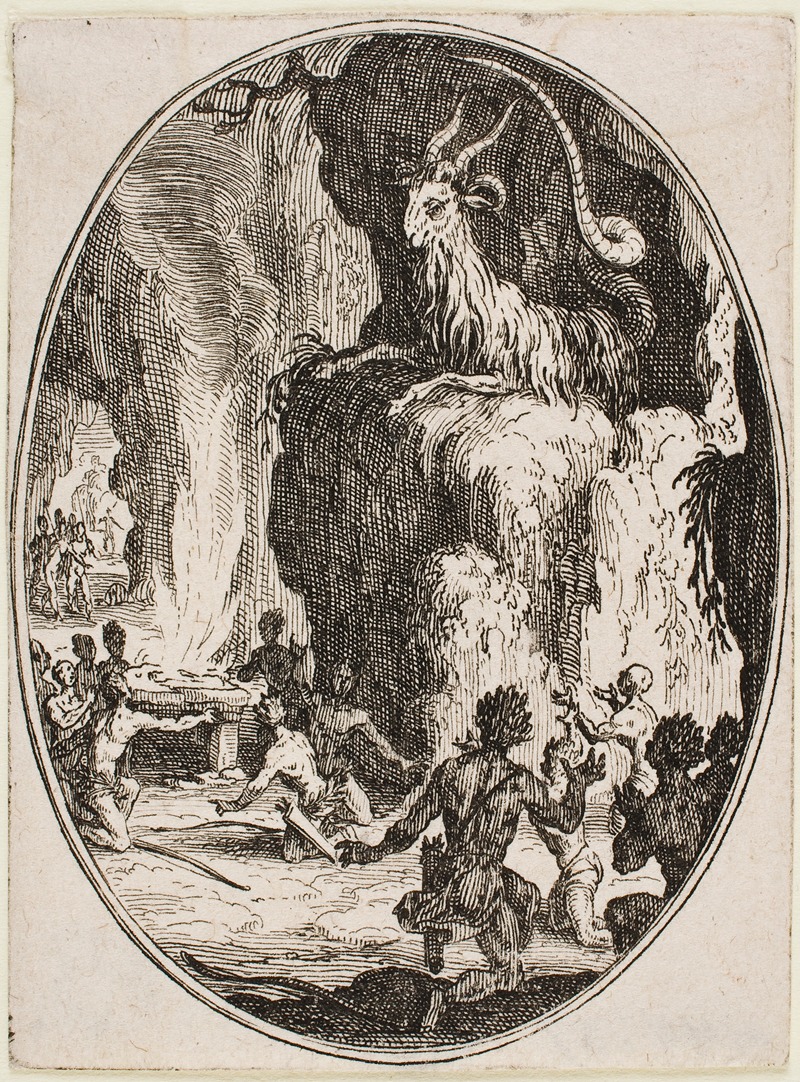
 

The Sacrifices - The Worship of the Devil (1626), Jacques Callot 

Demons might also barter, though are always loathe to give up their freedom. Building a tower to house the demon is a common request, one reason wizards often live in them. 

Seeking a demon to acquire a specific spell works well if players are looking for keys to specific obstacles. Especially in designing a Metroidvania style-megadungeon with hard locks or gates, players can reason "We need to kill the demon of water breathing if we want to get through the underwater tunnel."

Demons as personifications and manifestations of spells take those spells to the extreme. They find and cultivate environments to maximize their spells. Here are some examples from the Knave 2e spell list and potential obstacles the spell might help overcome.

1. Demon of Waterbreathing - lives in a wooden cottage at the bottom of a deep lake. Never surfaces, but sings poetry dedicated to the moon, releasing air bubbles. Obstacle: underwater passageway or dungeon.

2. Demon of Animate Object - lairs in an Ikea warehouse with a handful of enslaved carpenters. Some, but not all of the furniture is animated, turning the warehouse into a mimic-den of sorts. Obsessed with modern art.  Obstacle: large statue blocking a path, putting on a magical puppet show for a childish prince. 

3. Demon of Spiderclimb - already gifted a tower without stairs or ladders. It scuttles up the smooth surfaces between floors, taunting those stuck below. Obstacle: a chasm, a similar tower, a ceiling lever. 

4.  Demon of Fireball - dwells in a sweltering hot furnace. Ignitable pitch and oil leaks from the walls and ceiling. Loves demonstrating its power. Obstacle: Frozen door, a room full of enemies. 

5. Demon of Magnetism - lives in a junkyard or an old battlefield full of rusted swords, a melancholic monster who laments past ruin. Can create small magnetic storms to whirl shrapnel and cut those within to shreds. Adventurers should take to not approach with metal armor. Obstacle: starting a gear mechanism, stealing keys from a distance. 

6. Demon of Animal Friendship - wanders around a verdant forest, surrounded by charmed woodland creatures. Despises humans and those it can't enthrall but easily fooled by animal disguises (such as wearing the pelt & blood of a boar). Obstacle: A sleeping cow blocks a bridge, a skittish rat with a door key around its neck. 

Illustrations of the book of Job P1.12 (1826), William Blake.

 Wizards as Spellbooks as Encounters

 If spells are both rare and dangerous to acquire, most rival wizards may only learn 1d4 spells in their careers. However, they would be absolute masters of these spells, extracting as much use out of their captured demons as possible. Wizards would similarly try to maximize their spell usage. 

1. Wizard of Summon Idol & Spectacle - Can conjure both real stone statues and obvious illusions. Leads a religious cult, impersonating a godhead, using the illusions to give divine decrees and the statues as objects of worship. Followers are stoic lotus-eaters. 

2. Wizard of Time Slow & Psychometry & Lock - Lives in a vault filled with time-based traps (room slowly fills with water, walls crush inwards, etc.) simply bypassed with slowed time. Each room is Locked. Psychometry lets the wizard identify and learn about objects. They sell this service, but keep a library of all the secrets they discover in the vault. 

3. Wizard of Silence & Time Jump - this wizard is cloaked in a aura of silence, as they drag steel blocks around them. Upon encountering a foe, they will Time Jump the boxes and feign muteness, attempting to lure their target closer. After wasting time, the block will return, destroying their foe. (Ok, I've been doing my best by rolling on the d100 table in Knave, but this one is tough).  

--- 

Creating spellbooks as encounters shows players what they can do with this power and makes treasure active instead of passive. Far cooler to win your magic through tricking a demon than off a the moldering corpse of a mage. 

Sunday, February 1, 2026

Hex'd about Hexes: What's over the horizon? (pt. 2)


Part 1 Here

 The witch's curse persists, but we stay silly. This is part 2 of Hex'd about Hexes, where I examine the procedures and maps of DnD's favorite* wilderness sandbox: the hexcrawl.

 I complained about two iconic (and licensed) jungle adventures. Outside of the problematic depiction of native peoples, these modules have tedious crawls with long distances between points, frequent encounter rolls, and high odds of getting lost and wasting IRL time.

Let's take a look at look at some other well respected adventures:

Dark of Hot Springs Island

Another Jungle island crawl! But significantly condensed, with each of its 25 hexes having 3 points of interest. While system neutral, the module provides a procedure for exploration. 

The party gets 6 watches per day to Explore (find a point of interest in the current hex), Investigate (closely explore a point of interest), Travel (between hexes) or camp, presumably (though this isn't explicit). There is an encounter every time the players Explore or Travel. Lastly, players can get lost, though the book leaves it to the GM (and the game system) to determine how this occurs. 

These options give the players a lot of choice! They can make decisions! "We found this den of something huge! Should we Investigate or look for something easier?" And the map is dense enough for each of these decisions to matter -- not "well north-east and north-west are the same because our destination is 6 hexes away."

While encounters are frequent, they add dynamism to exploring. Encounters have context; the lizardmen aren't just wandering around, they are outside a location, which they have an opinion on.  Encounters are much less likely to be random fights. My only misgivings is the encounter table are nested 3d6 rolls, meaning the DM has to roll twice for an encounter, which could be streamlined but isn't too different from regular encounter rolls. 

How much exploration the players can do in one session is really dependent on if they want to Travel of Investigate. The procedure does require some rolling from the DM (especially if getting lost is a factor in your system), but something happens each time an action is taken, so it doesn't feel as tedious. 

The one question I have for Hot Springs Island is how difficult should camping be. Should players need a safe haven (a town or encampment)? How safe is the Dark at night? This can motivate players to gauge how far they can travel per day.  

Evils of Illmire 

Deviating from our theme of jungle, we move into the swamp. Evils of Illmire is a similarly condensed hexcrawl with 19 hexes populated with ~15 dungeons (with 10-15 rooms roughly). Illmire is mostly system neutral, though says it is most compatible with OSE. Illmire has a light touch with its procedure: it specifies that hexes are 6 miles, taking 4 hours to cross and players have a 3-in-6 chance of finding a dungeon per day. Encounters are checked each time the party explores, travels, or camps. 

With each hex having a dungeon, a 50% chance to find one per day is high, a 50% chance for nothing to happen is also high. The null case of dice rolls (you roll and nothing happens) should be avoided. That said, this procedure works in this case because each hex has a dungeon. Using this procedure for Isle of Dread would be maddening -- players would have to explore every hex multiple times to discover any dungeons. In this way, the procedure compliments the specific map it is written for. 

 Lastly, most of the hexes have some landmark feature that the players can engage with if they can't find a dungeon, those the dungeons are where the meat are. In Landmark, Hidden, Secret parlance, both Hot Springs Island and Illmire gate their most interesting content as Hidden points, accessible at the cost of time.

 Hideous Daylight

I'm cheating a little bit to include Hideous Daylight as it's not a wilderness sandbox, but closer to a dungeon crawl. It's 19 hexes, each filled with an encounter, a trap, something weird, or set dressing.  The hexes are 1/2 mile, so players can see the entirety of the garden, and threats can see them too. This means there is no chance of getting lost and the players can immediately start making plans about where they want to explore ("Let's check out those statues in 18. But how should we get there?"). 

It takes 10-20 minutes to traverse a hex, and a 2-in-6 chance of a random encounter is rolled each time the party travels to a new hex or lingers. This is standard rolling for wandering monsters from any dungeoncrawl, which encourages players to be efficient in their movement; dilly-dallying drains resources via encounters. 

Since they can see the entire crawl, they must decide on what juice is worth the squeeze. "The statues look interesting, but that's far away and we've already taken STR damage." This is opposed to crawls without obvious features. While players must make the same judgement about how far they can get, without being able to see an end destination, wandering monsters feel more like a tax than a risk. (This is especially true in systems (5e) where resting overnight alleviates all wounds). 

Dolmenwood

Dolmenwood might be the loudest voice in the room, though I don't think I can fully do it justice while being brief. Some key procedures: parties are given "Travel points" per day based on their Speed. They can spend those travel points on moving between hexes or searching a hex for hidden features. This is similar to Hot Springs Island, but is more modular as terrain affects how many travel points are needed for an action. Players have an illustrated map of the region, so they can make a roughly informed decision of whether to travel or search, absent of other information. 

Players can get lost, incentivizing them to stick to roads. The campaign book suggests two approaches to handling getting lost: telling the players directly where they've moved to instead or keeping that information hidden. Since the players have an illustrated map, the former makes more sense to me (though I have a strong bias against getting lost). 

Lastly, one encounter roll is made per day. Most of these are "a group of creatures," so the Referee has to inject some dynaicism, though Dolmenwood is so richly detailed this shouldn't be too hard. In sum, the Referee rolls two dice (lost & encounter) while the players have the opportunity to make a plethora of macro decisions.  

The map compliments the procedure - the roads between settlements might be the safest routes, but might not be the fastest. The rivers and lakes provide obstacles to navigate. While the hexmap is large, it's not sprawling; there is great depth to each hex, making each day of exploration meaningful. Likely, the party will spend much playtime in one hex, searching it, but the determined party can march through several hexes relatively quickly in IRL time.

---

For all of these modules, there is some play to the crawl. Players can make informed decisions. There are fewer null cases where nothing happens. With points of interest condensed, players can get to exciting material quickly; the pace of play is improved. Next time, we'll take what we've learned and try to apply it to writing a new hexcrawl. 


 *See also: Point crawls

Sunday, January 25, 2026

Hex'd about Hexes: Welcome to the Jungle (pt. 1)

I recently participated in a Blogwagon, writing a hex for a Christmas themed hexcrawl. Hexcrawls have been on my mind after finishing a small hexcrawl campaign with my players. One take-away I had was that how the procedure interacts with the map is significantly more important than the contents of the map. A given map-and-procedure combo answer these core questions differently:

  • Is the crawl a "mini-game" to get to one location or meant to sustain multiple sessions? 
  • Are hexes being used to solely measure distance or is there play to travel?
  • How many hexes should a group get through in a session of play?
  • How much time should they spend in 1 hex?

The answers to these questions should inform each other and how the hex map is constructed. To unpack this more, let's take a look at some  D&D Brand(TM) hexcrawls.

Isle of Dread  

 The OG wilderness exploration module and first TSR hexcrawl. It's using 6-mile hexes with a sparsely populated map (24 keyed locations in >200 hexes) and a slightly modified exploration procedure from Expert D&D - players map "1 hex of terrain in every direction when they pass through a hex," improving the odds of the players actually finding something.

Some rules: Movement in the wild is 1/5 of a move per turn in miles (a fighter with a 90 ft move can travel 18 miles in one day as a given example). However, jungles, mountains, and swamps reduce speed by 1/2. Normally, this would prompt some decision making on route,* but Isle of Dread is entirely jungles, mountains, or swamps, so a 90ft move fighter is always going 1.5 hexes. Additionally, players have a 3-in-6 chance of getting lost in the jungle per day. 

Parties with a guide can't get lost, making a guide basically mandatory. One of the villages on the Isle offer explicit guide services, but they will only travel ~a quarter of the way north.  Presumably, other friendly humanoid tribes would offer guides, though this isn't explicit in the text. Largely, the players are left to get lost. 

Lastly, the DM checks for encounter twice, during the day and during night. Jungles have a 4-in-6 chance of an encounter, so basically one per day.

Let's see an example of this in play:

The players have just run away from a difficult combat with the Rakasta Camp (9), fleeing northwest. They decide to press onwards. The players break camp and the caller decides to move northeast. The DM rolls twice, once for an encounter (4, yes) and once for getting lost (another 4, no). The encounter they roll is 2 dryads. The DM decides that 9 miles rounds up to 2 hexes. 

DM: You move 6 miles northwest into more hills. You can see west to northeast is jungle but to the east are hills. Suddenly, you see 2 dryads... [Encounter]

Caller: We continue north.

DM: Northwest or northeast? 

Caller: They're both jungle? I guess it doesn't matter - northwest.   

DM: You travel into the jungle. All around you is more jungle. Night falls, and you need to make camp. [The DM rolls for another random encounter, but the party is safe tonight. Day breaks and the DM makes 2 more rolls. The players are safe today but get lost. Rolling a die, the DM decides the party will veer west]. 

Caller: We heard there was a plateau in the center of the Isle, so we'll keep moving northeast.

DM: [marks that they move NW instead]. Ok, You move northeast and see jungle all around you, some tree houses to your west (10).

Caller: Interesting! We'll go investigate. [Play continues]. 

---

Some takeaways: there's a lot of dice rolling on the DM side and none on the player's side. Once the players pick a direction, there's no reason for them to deviate. Getting lost was a boon in this case, as it actually gave the players something to interact with. But this process is tedious (especially if the players are changing ideas on where they're going based on new information; in the given example, the Caller is not discussing with the group. This gameplay is largely repetitive and lacks monotonous. 

 ---

 Tomb of Annihilation

 36 years after Isle of Dread, WotC released Tomb of Annihilation, a hexcrawl through the jungles of Chult. With a set-up similar to Isle of Dread, surely, the largest TTRPG publisher wouldn't make the same mistakes as they did over 30 years ago?**

The hex map has >300 hexes with ~27 points of interest. It takes 30+ hexes to move from the starting city to Omu, a key location. Players move 1 hex per day, or 2 hexes if they take canoes. Moving fast increases your speed by 50% (but makes you more easily surprised) and moving cautiously cuts your speed in half (but means you can avoid encounters). This pace is incredibly slow -- it would take the party 6 days (12 hexes) to reach the nearest point of interest by boat if they take the most direct path from the starting town. 

Each day the DM rolls three (3!!) encounter checks, an encounter occurring on a 16 or higher on a d20 (25% of the time). Per day, this means there's a 58% chance of an encounter. 6 days out from the starting town, we can expect an average of 3.5 encounters. 5e's combat runs slow (combats take me at least 30 min, typically 1h+), which would mean if each encounter was a fight,*** a single session would essentially be "you travel to this point, and that's it." (if they even make it, some points are even further away).

The party can also get lost if their navigator fails a DC 15 Survival check. They learn where they have (wrongly) moved to when they succeed this check. Let's be generous and say they have a +7 to Survival, difficult to achieve at low levels, they are still failing 35% of the time. So you can expect ~1/3 of your days traveling to be essentially wasted, which means more encounters. Learning where they got lost when they succeed on a check minimizes the amount of remapping and frustration players can feel at the table. 

Lastly, there is some mention of resource management under "dehydration," where players need 2 gals of clean water per day. "Create Water" is a level 1 spell that solves this problem. 

Let's consider play: 

Caller: We know our destination is south, so we move south.

DM: Great, let me roll 4 dice (3 for encounters, 1 for getting lost). [No encounters are rolled, they didn't get lost]. You move south into more jungle. Mark off water as you camp for the night. 

Caller: Ok, we move south the next day. 

DM: Alright, let me roll 4 more dice again. 

Etc. 

This feels mind-numbingly tedious. And this is the case where nothing happens! Imagine if there was an  encounter! Or if they got lost! Additionally, the map of Chult is so large, it's easy to miss points of interest by just wandering past 1 or 2 hexes. These are the same problems as in Isle of Dread, but somehow worse. 

---

Largely these hexcrawls are flawed as the procedures are not in communication with the map itself. Tomb's 3 encounter checks per day would be perfectly fine if you could move through 6 hexes per day. Or if each hex had a point of interest and the map was twenty times smaller. Isle of Dread has players move at 1.5 hexes per day, which is just inconvenient for mapping/tracking. Despite 30 years of TTRPG innovation, both of these modules have the same approach. Circling back to our core questions, let's examine them:

  • Is the crawl a "mini-game" to get to one location or meant to sustain multiple sessions? 
  • Hexcrawling is the focus of the adventure.  
  • Are hexes being used to solely measure distance or is there play to travel?
  • Mostly the former. There are no decisions (play) besides which direction to go. Few landmarks to navigate by.
  • How many hexes should a group get through in a session of play?
  • For Isle, I'd guess around 8? That's roughly 4 days & 4 encounters. For Tomb, probably about 6 -- about 3.5 encounters for one 5e session. 
  • How much time should they spend in 1 hex?
  • Basically no time out of game, except for special points of interest.  
  • There is a disconnect between questions 3 & 4 -- if players shouldn't spend a ton of time in these hexes, then moving through them should be fast so they can actually get to content. These two examples are representative for many hexcrawls in this style: large empty spaces meant for players to wander around in, going through repetitive motions, dragging the game to a crawl. And it's easy to fix! 

    Both modules even mention ways to improve this experience: pulling back on the random encounters. The authors know their procedure isn't functional. If you're writing a module that has an evident flaw in the procedure, don't tell the DM to adjust as needed, fix the procedure. I would also recommend removing the ability to get lost -- while iconic, the challenge is largely out of the players hands (succeed on a roll) or easily solved (hire a guide). And the punishment for failure is out-of-game consequence of boredom, rather than interesting in-game consequence. 

     This ran a little long, but I think it's worth going into detail since these two modules are iconic examples of hexcrawls (I'd reckon Tomb is what most 5e players think of when they think "hexcrawl"). Next time we'll look at modules where the procedure plays more with the hexmap. And we'll see if someone can make a engaging jungle island... (Spoilers: yes)


     *The decision making here can just be algebraic without a well-designed map. It boils down to "which route is fastest?" which is not a decision, but an optimization. 

     **I will confess to being a bit of a 5e hater, and WotC specifically. I'm trying my best to be objective and not just dunk on them.  

    ***Looking at the encounter table, most of the encounters are "this animal is pissed off you woke up with your nose still attached to your face." 


    Wednesday, December 10, 2025

    Merry Hexmas: Sadtown

    Merry Hexmas! There's a blog bandwagon up, and I've feeling extra hex-y this holiday season, especially for some Rankin/Bass Christmas cheer (or lack thereof in this case). It's a community project, so go check out the other blogposts too (I've linked quite a few here, but not all). If you link up one of your hexes next to mine, message me on Bluesky and I'll update my hex connections!

    ---
    Connecting Hexes:

    Entering this Hex: All points of interest can be seen. An icy river cuts across this landscape of snowy hills. 

    A. Sadtown. A sooty, bleak town with a blazing bonfire in the center

    B.  Blues Rock Prison. A towering jailhouse, encrusted with translucent ice pillars. 

    C. Gingerbread House. A small cottage by the frozen river.

    Sadtown

    The road into town is lined with spears hoisting pickelhaube helmets. Townfolk look forlorn and without hope, barely regarding strangers. Soldiers, dressed sharply, look on aimlessly as they patrol the town. Only Corporeal Grim will interrogate strangers (the party). 

    Once a joyous village, Miser Master began to enforce his "Law of No Cheer," forcing townsfolk to give up their toys and frivolity to focus on work. Strangely Germanic.  

         Locales

    • Bonfire - crackling golden red flame burns in the center of town. A pile of toys burn, as their holiday magic igniting in golden hues. Children look on with sadness. Corporeal Grim monitors the square, making sure no "fun" is a foot. 
      • Burning toys - Ever since the Miser Master has implemented his ban on holiday cheer, townsfolk have been forced to sacrifice their toys. 
      • Ritual - arcane runes are carved into the cobblestones ringing the bonfire, only visible on close inspection. Burning toys in the ritual circle channels their Christmas cheer into Miser Master's Snow Globe, powering it.  
    •  Town Hall - an imposing gothic structure. Inside, Miser Master, lord of Sadtown, holds court. Townsfolk grovel, while a dozen elite soldiers look on with steely eyes. Miser Master gripes his Snow Globe as couturiers beseech him. He has grown cruel and megalomaniac with power. 
      • Who is in court?
      1. A salesman from the Babbling Baboon argues his products aren't toys, they are "toy-like objects." (They also don't have Christmas cheer) 
      2. Representatives from the Trademark Megacorp Factory presuade Miser for the law to allow their candy canes, fresh from the Candy Cane Forest. Their slick presentation, ability to suck-up to higher-ups, and generous bribes are convincing. 
      3. A captured Elf (from the Ironwork's Tiny Bronco crew) is being sentenced to imprisonment in the Blues Rock Prison.
      4.  A scout reports on conditions at the Orcish Toy Factory. Miser Master muses on launching a raid. 
      5. A villager pleads to keep his souvenirs from his vacation at the Mooncap Manor.   
      6. Miser Master berates a scout, winded and doubled over panting for failing to capture this rumored "Gingerbread Man."
        • Quest: Miser Master pays bounties for any captured toy-making elf (500 gp) or any toys (50 gp per 1 slot). 
    • Orphan Asylum - Children huddle at the windows at the approach of newcomers. They sit on the floor, playing with sticks, stones, and rat bones. A stout young woman, Miss Jess, takes care of the orphans as best she can. A portion of the orphanage is cordoned off for the "sick ones." 
      • Children's toys - while most of the children have naught, some have real toys. They are extremely secretive with these, but have a glitter of wonder about them. 
      •  "Sick Area" - hidden away behind curtains, an injured elf lies in a sickbed. Miss Jess nurses Christopher Klautz back to health while evading the wrathful eye of Miser Master. Klautz pays back the favor with toys for the children, made with his elf magic. 
        • Quest: Find a way to provide for the children (food, toys, cash) or a way to heal Christopher. No rewards (except thanks).  

        Dramatis Personae

    •   Corporeal Grim - the only competent soldier in the town. A keening eye, an wagging finger, and a well-pressed suit. His curly mustache is a popular style in town. 
      • Wants: Order, neatness. Someone else competent to work with.  
      • Fears: Being perceived as foolish. 
      • Mannerism: Indifferent to suffering, mild mannered. 
    • Miser Master - an old, large man with an almost skeletal face, ruler of Sadtown. He enforces his "Law of No Cheer" with an iron fist. Secretly, this sorcerer siphons Christmas magic by ritually sacrificing toys. He rarely leaves his throne in the Town Hall.
      • Wants: Power, his ego stroked. To be the happiest person because everyone else is miserable. 
      • Fears: A rebellion or up rising. For his grasp on power to slip.
      • Mannerism: Grouchy, ranting, megalomaniac. 
    •  Miss Jess - A young, red-haired woman, who runs the orphanage by herself. Dressed simply by necessity, she gives more than she has. Seen as a saint by the villagers, though barely tolerated by Miser Master. 
      • Wants: the children to have toys again. To fall in love with Christopher. 
      • Fears: Christopher being found out. The orphans to be abandoned. 
      • Mannerism: A patient, understanding school teacher. 
    • Christopher Klautz - a (tall) elf who injured himself falling off a rooftop. His bright-white hair sets him apart from the townsfolk. His presence is known to only Miss Jess and her kids. 
      • Wants: To make the children happy. To run away with Miss Jess. 
      • Fears: Being separated from Miss Jess.  
      • Mannerism: Overly enthusiastic, but full of cheer.  

    Snow Globe - a twisted pine staff with an orb filled with falling snow atop it. The pine bark is etched with gold. Powered by Christmas magic, enhanced by Miser Master's ritual. 

    • Once per day, the wielder can Scry anywhere is it currently snowing. 
    • The wielder can shake the staff to cause a mini-earthquake (DEX save or take d6 damage). Magnitude can be enhanced via Christmas magic.  

     ---

    Blues Rock Prison

    A fortress encrusted in clear, icy pillars. There's only two ways in: through the warden's well-watched front door or over the bone chilling frozen waterfall that springs from the center of the prison. The prison holds many of Miser Master's foes: elves, toymakers, small people he mistook for elves, etc. They toil away breaking ice. Some plan to use the waterfall, which runs from the prison's courtyard before crashing down outside, to make a daring escape. 

    Warden Icehole guards the prison, on Miser Master's payroll. Too big for his britches, he likes to brag and give tours around the facilities. His lack of care is somewhat justified -- he's hired 6 Yetis to guard the prisoners. He's found they can be well trained if incentivized with reindeer haunches. 

    Hardrock "Brass Bells" Verdi has a plan to escape though. Hardrock, his tattoo artist Jo, and a few other of the fellas have figured out they can break out if they can somehow 1) break down the portcullis blocking the waterfall, 2) surf out on an ice float, and 3) survive the fall. All while managing to avoid the Yetis. 

    Without outside assistance, the plan will fail. 

    • Jo will be caught chiseling away at the portcullis and devoured by Yetis. 
    • The ice float will work, but it will be so cold, the crew will get pneumonia as they chisel it.
    • During the escape, the Yetis will catch half the crew. The other half will not survive the fall to the bottom of the waterfall. 

    Other interesting prisoners:

    1. A Jack-in-the-box: Sentient, longs to return to the Ilse of Misfit Toys
    2. A Ceraphalophore: Named Berilark, he holds in head in his hands while he sighs sad poetry. Arrested for "strange behavior," he's not quite sure what's happened to himself. 
    3. A swearing penguin.
    4. A Baker. She's afraid of his creation, the Gingerbread man, has gotten free. She knows the Man's weakness: he can't cross running water (and will ask for a ride & be easily captured). 
    5.  A big pile of snow. Previously a Snowman, his heart grew too warm. 
    6. A dozen kids. All really quite cold, they promise they aren't elves and promise to they'll be good this year. 

    https://mdl.artvee.com/ft/963331il.jpg 

    Gingerbread House

    A frozen river trickles by a candied cottage. The otherwise plain cottage is decorated with giant gumdrops and candycanes. Outside, a young man (?) cheerfully carries firewood.

    The Gingerbread Man (Stats for Carin) 4 HP 8 STR 18 DEX 10 WIL Rolling Pin (d6)

    • You can't catch me! - The Gingerbread Man can move 90' per round. 
    •  Nimble - characters making ranged attacks against the Gingerbread Man must make DEX saves to deal damage successfully.  
    • Crumbly - Whenever the Gingerbread Man takes STR damage, he loses a limb at random.

    The Gingerbread Man, the final creation of the imprisoned Baker, is an immature delinquent. He will laugh and run and run. If ignored, he will grow frustrated and start to launch drive-by attacks with his rolling pin. Around his neck is a Gingerbread Cog, stolen out of boredom. 

    He cannot cross the river, though will gladly accept a ride on someone's back to cross. The ice is thin and water freezing, making crossing extremely dangerous.  

    Gingerbread Limb - Eating part of the gingerbread man imbues the effects of Haste on the eater for d6 turns. 

    Gingerbread Cog - A stolen part from the Weather Advancement Institute's Gingerbread Mecha. Needed to repair Knee #3. 

    Rolling Pin (d6) - While functional as a club, using this pin to bake creates sentient pastries. 

     Inside the cottage -A stove loaded with gingerbread limbs, unbaked and poorly made. The stove's fuel is empty. Amongst crayon drawings of happy gingerbread families, there is a blueprint for putting all the gingerbread pieces together to form a gingerbread man.


    Monday, December 8, 2025

    Rogue Like Character Generation

    I’ve been weaning my players off the sour milk of 5e and supplementing them on the udder delight of the OSR. The transition, though mostly smooth, has one chaffing point: character creation. 


    Trying Knave 2e, Carin 2e, or Holmes Basic, my players quibbled at the random & minimal character creation process. Characters are meant to be simple and quick to make, given the lethal nature of most OSR games. But my players like their blorbos, they like feeling like a bigger part of the world a la a backstory, and they like customization (Side note: did you know there are over 40 ancestries in 5e (2014) now? Where are these guys living?) 


    In the intersection of these two dichotomies, I present the “rogue-like” character generator. It’s fast and allows for a good deal of player choice. It’ll leave characters stronger than the typical level 1 grave robber, and the general process is compatible with any class-less system (Knave, Mausritter, Into the Odd, etc). Here’s how it works:


    1. Generate a list of abilities. Write them down on pieces of paper or into a digital generator (I use Perchance).
      1. This list should be easy to make. Steal from other classes, magic items, etc. “Turn Undead” or “Immovable Rod” are good choices. 
      1. I prefer toolbox abilities that give my players more interaction with the world. I do include a few raw stat boosts for the more numerically inclined players. 
      2. This is also an excellent opportunity to slip in Dark Souls world building or minimalist lore.
    1. Put the paper slips in a cup and have a player pick 3. They choose 1 to keep and put the rest back. Repeat twice (or however many times you feel like being generous). 
      1. This guarantees each ability is unique to a character. 
      1. Very quick! It’s picking slips three times and writing it down (or just taping the paper to their character sheet). 
      2. Obviously, the more abilities you hand out, the stronger the players will be.
    1. Viola! The character is done. Fill out other ability scores as normal.

    https://mdl.artvee.com/ft/606507sl.jpg 

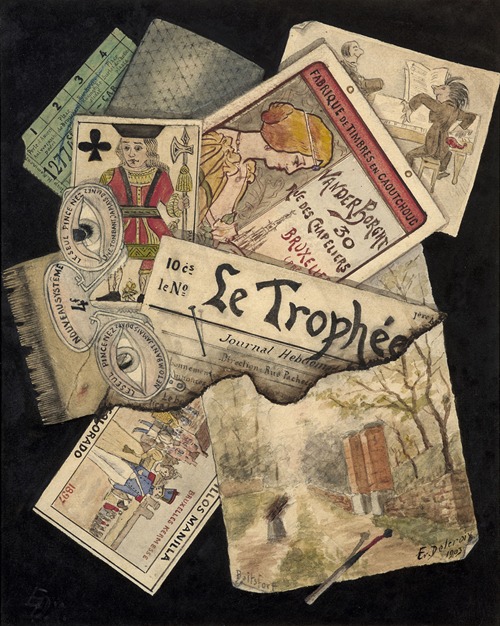
    Trompe l’oeil of playing cards, matches, posters and watercolour landscapes (1903) E. Delcroix

    Variants

    A.    Categories. I like to put each ability into a category (Martial, Arcane, or Item/Misc.) and have the players pick one slip from each category. This ensures if someone really wants magic, they’ll always get one magic option. 

    B.    Draw 5, pick 2. Players draw 5 slips and choose 2 of them. Allows for more limited choices, but since they pick two, they can guarantee the two they pick go together (as best as they can). 

    C.    Leveling Up. When characters advance, they can roll for a new ability. An additional variant would be they could replace an old ability. 

    D.    Ancestries. Some slips say “Elf,” “Dwarf,” “Killer Robot,” etc. with the ancestry tag. These traits can only be chosen if they haven't claimed ancestry (so no Dwarven Killer Robots). 


    If you’re curious what list I pull from, you can take a look here. I curate it some, depending on what adventure I’m running (so nobody gets Swamp resistance in the campaign set in the desert). I stole a lot from blogs and games, so if you see something that's yours, thank you!


    Saturday, November 22, 2025

    d66 Power Sources

    Crystals, what can’t they do? If you need to trap an ancient evil, power up a doomsday device, or send a small child on a series of world-defining fetch quests, crystals have got you covered. One might say too well covered


    I think crystals have become a lazy McGuffin in lieu of any other power source for magic, robots, or rituals. Here’s a d66 list of alternative energy sources to help you escape from the crystal caves:

     11. Blood vials. Life essence, drained thin and red. 

    12. Star fragment. Cast off skin of a cosmic body, glowing with otherworldly light. 

    13. Imp in a hamster wheel. If idle hands are the devil’s play things, then busy feet are the devil’s business. 

    14. Dinosaur Bones. Hidden within the earth, remnants of the forms of extinct megafauna. Bird bones will do in a pinch. 

    15. Ectoplasm. Spiritual residue from hauntings, things powered by this have eerie afterglows and erratic behavior. 

    16.  Hair of an Elf. Rich and radiant, worth more than if it was spun from pure gold. 


    21. Ahab’s Hatred. Pure and fanatical energy, enough to drive a man to the end of the world. Enough to make a man grand, godly, and un-godly. 

    22. Moon Fragment. Stones from Earth’s sister, wanting to return to their progenitor. 

    23. Goblin in a hamster wheel. Nobody work ‘arder than da green guys. 

    24. Bark of the World Tree. All the world's fates are written on the bark; to change the bark is to change the fabric of life.

    25. Raw Amber. Crystalline tree life-fluid from primordial titans. 

    26. Another monster. Need to trap a fiend? Hire an archfiend? Need to power your staff of fireballs? Enlist a very small dragon. 


    31. Faerie Dust. Twinkling, tricksy magic from twinkling tricksy folk. 

    32. Fruit of the Jub Jub Tree. Fiercely guarded by the bipedal jubjub bird, naturally. Swelling with ripeness, fit to provide nutrients for months. 

    33. Skulls of Saints. Divine in life, with all impure thoughts driven from their mortal vessels, they are doubly divine in death. 

    34. Money. A commodity so powerful as to make the world turn. 

    35. Electro-plasma. Residue from when a ghost is hit by lightning. Shockingly efficient. 

    36. Vibrant Song. Choral resonances coupled and folded over each other in spiritual unity.


    41. Oil & Steel. That which powers machines and gives metal thoughts. Steel to construct and replace flesh. 

    42. Uranium. Hey, if it works in real life, why can't it work in fantasy land? Give your demon a uranium reactor core, see who cares. 

    43. Mathematical certainty. Nothing more irrefutable than a well postulated formula. Nothing holds greater weight in the courts of order. 

    44. Never melt ice. Frozen in the deepest heart of the northern most polar, this ice never thaws in the face of the hottest flame. 

    45. Giant Hamster in a hamster wheel. When a hamster, imp, or goblin won’t cut it.

    46. Rasputin’s seed. Potency sourced straight from a warlock. Comes in a small flask


    51. Tris(bipyridine) ruthenium (II). Small, red crystals that amplify any light shown on them. A common catalyst for alchemists. 

    52. Lost innocence. The kind found discarded after a coming of age story. Fragile and ephemeral.

    53. Mirror that’s seen the face of god. Looking into it, it seems to only reflect your visage. 

    54. Philosophical zen. Power found in asserting “All things are as they should be, and all things will be as they must.”

    55. Chains forged in the fires of Mt Doom. Hellish steel, imbued with the hatred of the flames that forged them, strong enough to restrain a god. 

    56. Dream of the sleeping leviathan. As the leviathan sleeps, the world turns. As it dreams, it reshapes the turning of the world.


    61.  Small tornados. Marginally easier to control than wind elementals, pure rotational energy.

    62. Gravity. The force to push and pull, typically given only to heavenly bodies.

    63. Tears of the Monarch. Whose golden brow gives us succor, and who weeps for wretched humanity. 

    64. Books of Knowledge. Wizards and the illiterate hoard these for the same reason: not for the ink on the page, but for the power within. 

    65.  Experience points. If leveling up via XP turns a common farmhand into a potent fighter, would else can raw experience do?

    66. Friendship. There’s nothing more powerful. 


    Sunday, October 19, 2025

    Is Dark Souls the greatest time travel story ever?


    No, the greatest time travel story is clearly Time Bandits, closely followed by Bill & Ted’s Excellent Adventure. Apologies for the click bait title. 


    Time travel stories are notoriously difficult to write satisfactorily, given the plethora of paradoxes and fallacies one can fall into. This is especially true for TTRPGs where the players have far more narrative control than characters in a scripted story. But temporal manipulation calls to me like the swan song of an albatross to a crossbow man


    The Dark Souls series has quite the habit of putting in time travel in unexpected places. From fighting a corrupted knight with a huge sword in the 1st game’s DLC, to fighting the memories of giants in the 2nd, to fighting a corrupted knight with a huge sword in the 3rd game’s DLC, I think there’s some rich fruit on the vine to steal, with minimal temporal paradoxes. After all, all games are Souls-likes. 


    undefined 

    1. The Failed Hero. Legend recalls that Artorias sacrificed himself and banished great evil. He did not. After being corrupted, the player must first slay Artorias then finish his task of banishing the great evil. 
      1. How to use: Basically 1-to-1. Seed the legend of a hero who saved the world, then time travel the players to the past. They must first overcome the corrupted hero then become the hero themselves. 
      1.  Issues: This is “cool fight DnD” not “door DnD,” more appropriate for 5e or Pathfinder than OSE, Knave, or Carin. Are there paradoxes? I’d say a minimal amount. If the heroes fail, maybe there’s another group who succeeds. Place this far away, temporally and spatially so any reverberations to the present are small. 


    2.     Memories of You. Touch a tree, and relive the memories of giants invading the continent. 

    a.     How to use: “Memory” as a time-travel device is much more malleable than actual time-travel. The players travel to the Sphinx’s memory of an otherwise forgotten crypt. 

    b.    Issues: Can objects travel out of memories? Maybe they just need lore hidden in the past. Also requires a bit more framing -- whose memory is this? Paradoxes could be more common, but easily resolved by saying “Hmm, that isn’t quite how I remembered it.” You’d have to decide whether the player’s actions have real effects on current events. 


    3.     The Future Martyr. At the end of the world, Gael has devoured the dark souls of all pygmies, save one. Yours. 

    a.     How to use: The arch-villain and/or MacGuffin lies in the far flung future, at the end of the world. The players must travel there, do what needs to be done, and return. 

    b.     Paradoxes? By setting the destination in the far future, you make it so any ripple effects aren’t felt. Setting the destination at the end of the world means no ripple effects are felt. 

    c.     Issues: Again, this cool fight DnD. This premise does need more massaging to compel players more. Dark Souls 3 doesn’t need to do this because the aim of the game is having cool fights. Maybe a future temple to plunder? Or a treasure vault set to open in 10,000 from the player’s time?


    4.     Stealing from Borrowed Time. A precious relic has been lost to the ages. The player must travel back before it's lost to recover it. Ok, this one isn’t from Dark Souls, but I still really like it. 

    a.     How to use: As on the tin. Fits a nice little causal time loop too! (The relic only goes missing because the players stole it). 

    b.    Issues: Again, setting things in the far distant past and spatially far away can minimize any timeline tampering. Similar to (1), if the players fail, maybe another group succeeds. Could also place the relic in the present day in a hard to find area. This is a bit of quantum ogre-ing, but one could argue that’s appropriate for time travel plots. 


    5.     Ocarina of Time. The great demon lord takes over the kingdom while you, the hero of destiny, are but a child. You skip forward in time to face them as an adult. Ok, this one isn’t from Dark Souls either, but it would be silly not to mention it.

    a.     How to use: Have two timelines -- one where the players are children and one where they are adults. As children, they cannot fight but can explore and influence the world around them. As adults, they are taken seriously by NPCs and can solve problems with violence. 

    b.    Issues: Yeah this one is tough. You’re going to have to juggle two timelines and see how one influences the other, making potential paradoxes rife. One solution is to minimize the impact of the players as children. Maybe they can’t alter fate entirely (can’t kill NPCs because they are children, can’t convince anyone with any power to change), but can make more subtle changes (hide a cache of goods to find in the future, take out long term bonds (?), change a minor NPC’s disposition, save a marriage, etc). 


    And those are my current thoughts on time travel. I’ve used Memories of You in a 5e campaign and it worked out well, especially to drop some lore on my players. Why have them learn about a historic NPC when they could meet them? 


    Spellbooks as Encounters

     It is a commonly held belief that spells are  demons , bound in leather & parchment. Wizardly grimoires then are highly valued because ...